|
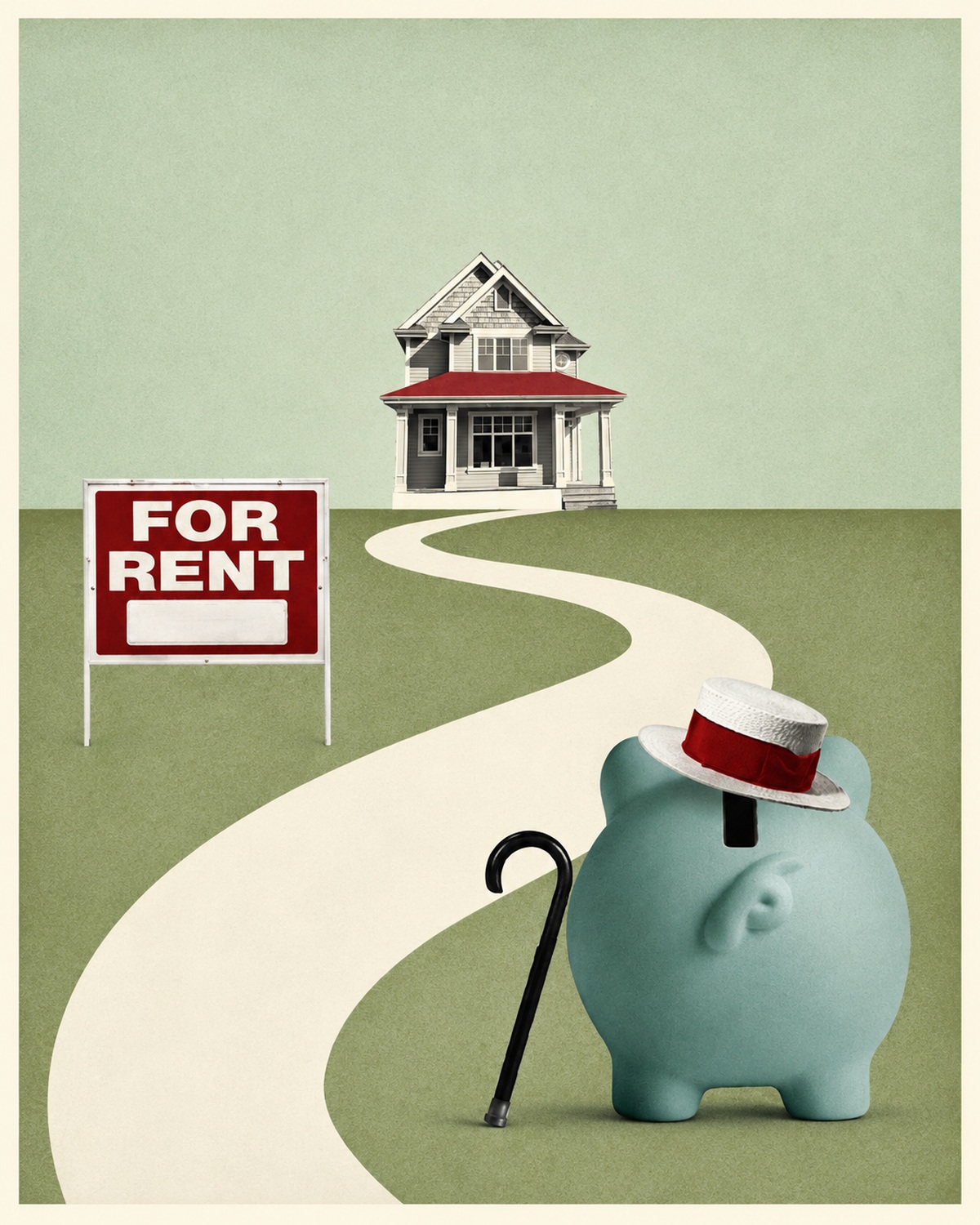
Renting through retirement can work, but planning has to start sooner than you might think.
Toronto Star contributor Renee Sylvestre-Williams writes about why many Canadians older than 60 are choosing to rent rather than own their homes.
Jacki Brown has never bought a home. She and her husband, who retired from the military, rent a three-bedroom house with a one-car garage and a fenced-in backyard for about $2,500 a month. A product of a military family that moved around, Brown decided the work of maintaining a house wasn’t worth it.
“I looked at the price of rent that we're paying for this house, and it was more than twice as much for a mortgage payment and taxes than it was for rent, so why would I pay twice as much to be responsible for the capital investment and work?”
The Ottawa resident, 58, had saved a down payment and talked about buying with her husband, but over the years the couple realized they preferred the convenience of renting. They decided to keep investing that money and live below their means. “And we knew he would have a defined pension, and we just said, ‘Well, we're going to just adjust our lifestyle, so that we live off his pension,’ ” she says.
With more Canadians older than 60 choosing renting over owning, could Canada become a nation of retiree renters? According to a 2024 report from Point2Homes, Canadians 65 and older made up 33 per cent of the solo renter market, and solo renters in their mid-60s and older grew by nearly three per cent between 2016 and 2021 — more than the lone renters in any other age group. As for Canadians who don’t own a home, 56 per cent say they never expect to become homeowners, according to a 2026 survey by Habitat for Humanity.
For those planning to rent through retirement, the question is how they can be financially prepared — for ongoing costs, annual increases, and the prospect of unexpected renovictions. There are options, whether you rent outright or have property to leverage.
Plan for rent hikes before you retire — not after
Planning to rent in retirement? Start early, says Samantha Sykes, senior investment adviser and financial planner at Raymond James.
“When I do financial plans for renters, you have to look at having a larger liquid portfolio,” she says. “And you have to have an explicit assumption for annual increases.” That means building guaranteed income, maintaining a more conservative drawdown rate on your retirement funds beyond your RRIF withdrawals, and preserving tax-sheltered savings as a buffer against higher housing costs later.
In practice, Sykes starts by asking clients about their pre-retirement annual expenses, then applies the industry assumption that overall annual costs drop to 70 per cent of pre-retirement spending.
“Then you factor inflation, cost of living, and then we just make sure that, for example, you’re going to have an annual rent increase. We factor that in, so we make sure you're factoring in how much your rent is going to go up every year," Sykes says. Planning software can model these projections automatically.
In Ontario, the rent increase guideline for 2026 is 2.1 per cent for units built and rented before Nov. 15, 2018 — and there is no cap on the increases in units first occupied after that date.
No pension? An annuity can act like one
For those who want the security of guaranteed income, Angela Iermieri, a financial planner with Desjardins, suggests using some of your retirement portfolio to purchase an annuity — a contract with a life insurance company in which you make a lump-sum or a series of payments in exchange for regular, guaranteed income paid out over a fixed period or for the rest of your life.
This can provide guaranteed regular income, and, depending on the type — life, term or variable — may also return interest and capital.
An annuity becomes especially valuable if you're retiring without an inflation-indexed pension. The money also has to last a lifetime: Canadians live to an average of about 82, according to Statistics Canada, and the number of centenarians — people aged 100 or older — is rising. Centenarians are Canada's fastest-growing age group, more than tripling since 2000, according to StatCan.
Max out your registered accounts — even the one meant for buyers
Herman Chan, president and co-founder of Crimson Financial, says to maximize registered retirement savings plans (RRSPs), tax-free savings accounts (TFSAs) and even the First Home Savings Account (FHSA). “Just in case there is a chance of potentially buying something in the future,” he says, noting that softening home sales may present opportunities to buy. If you decide not to buy, the money in the FHSA can be transferred directly into your RRSP or RRIF without immediate tax consequences and it won’t affect unused RRSP deduction room. “It’s like a bonus account,” he says.
Permanent life insurance can also build cash value — the tax-preferred savings component within such policies — providing financial flexibility through borrowing or withdrawals. Chan says this option suits younger investors with 10 to 20 years to pay premiums and allow cash value to build before retirement.
From owner to renter: Why selling can set you free
If you own property or expect to inherit, the proceeds can help fund renting in retirement.
Susan James, 83, decided to sell her Toronto condo four years ago and become a renter. She loved the place, built in 1922, which had charm but no amenities — not even an elevator.
“I was on the main floor of a three-floor building, but the laundry room was in the basement,” she says. Carrying the laundry up and down became a struggle. “It became really difficult for me to do the laundry, so my daughter said, ‘We're moving, you're going, you're going to leave it.’ ”
Instead of buying a new place with an elevator, James downsized into a two-bedroom apartment in the same neighbourhood.
“All of a sudden I became a person who had fun at an age where it's really, really important to have fun,” she says. Since becoming a renter, she has the funds to travel and give money to her children and grandchildren. Her two-bedroom, two-bathroom apartment is in a professionally managed building and costs $3,100 monthly.
When James sold her condo, her agent connected her with a financial adviser.
“I said to him that I am concerned about two things: one, that I have enough money to grow old gracefully. I am perfectly healthy,” she says. “Both my parents lived to 98, so there's a good chance that I will live a longer life than most people. And I want my money to take me through that, so that my girls don't ever have to worry about looking after me financially.”
James covers her rent through her pension from her career at the attorney general's office, along with her investments, Canada Pension Plan and Old Age Security payments.
When asked about renovictions and larger-than-expected rent increases, both women said they’ve planned for the possibility. James faces a lower renoviction risk, living in a professionally managed building, while Brown keeps first and last month’s rent saved, just in case.
These days, while her friends are doing weekend renos, Brown and her husband are out on their bikes, looking after their aging parents, and travelling. ”Now we have a grandchild, it's really nice just to walk out, lock the door, and go.”
|